Why is my car losing coolant but no leak explained
It’s really frustrating when your coolant level goes down but you don’t see any leaks. Many drivers wonder why is my car losing coolant but no leak shows up.
We often think a hose or radiator problem is the cause. But, the real issue might be inside the engine. When coolant disappears without a sign, it usually means there’s a problem inside the engine, not outside.
Internal engine problems, like a blown head gasket or a cracked cylinder head, can cause this. The coolant goes into the engine and gets burned off. This leaves you with a mystery of where the coolant went.
I made this guide to help you find the problem. By following these steps, you can figure out why your cooling system is failing.
Key Takeaways
- Internal engine damage often causes fluid loss without external puddles.
- A blown head gasket is a common culprit for disappearing liquid.
- Systematic inspection helps identify hidden mechanical failures.
- Burning fluid inside the combustion chamber leaves no visible trace.
- Professional diagnostic tools can confirm internal leaks quickly.
Understanding the Mystery of Coolant Loss
When I see my car coolant disappearing, I start to look into the cooling system. Many think a leak must show up as a puddle. But, that’s not always true. Finding out why car coolant loss mystery happens needs us to check our cars often.

The Role of Coolant in Engine Health
Coolant keeps your engine cool. It goes through the engine and radiator to take away heat. Without it, parts can get too hot and break.
I keep my car’s cooling system healthy to make it last longer. It keeps the engine safe from damage. Keeping the coolant level right is key to keeping your engine in good shape.
Recognizing the Signs of Disappearing Coolant
Spotting early signs of coolant loss can save you money. A temperature gauge that moves up and down while driving is a sign. If it goes too high, your coolant might be low.
A sweet smell inside the car is another clue. It means coolant might be leaking into the heater or evaporating. Also, foggy windows can mean there’s a leak somewhere.
| Symptom | Potential Issue | Urgency Level |
|---|---|---|
| Sweet Smell | Heater Core Leak | High |
| Fluctuating Gauge | Air in System | Medium |
| Foggy Windows | Internal Cabin Leak | High |
| Engine Overheating | Severe Fluid Loss | Critical |
Why is my car losing coolant but no leak
When your reservoir runs dry but the ground is dry, your engine might be using the coolant. Many drivers are confused because they don’t see any puddles. But, the real problem might be hidden inside the engine.

Distinguishing Between External Leaks and Internal Consumption
Leaks are easy to spot because they leave stains on the ground. But, if the coolant is being used inside, you won’t see any puddles. This is because it gets burned up in the engine.
This engine coolant vanish happens when the cooling system fails from the inside. The coolant gets burned with the fuel and comes out as white smoke. You might not see any leaks, but your engine is losing coolant.
«A cooling system that loses pressure without a visible drip is a classic sign that the engine is consuming its own lifeblood through a failed internal seal.»
Common Culprits Behind Invisible Coolant Loss
Many parts can fail and let coolant leak into the engine. I suggest checking these areas if you think coolant is being lost inside:
- Head Gasket Failure: This is the most common cause, where the seal between the engine block and cylinder head breaks.
- Intake Manifold Gasket: A breach here can allow coolant to be sucked directly into the intake ports.
- Cracked Cylinder Head: Micro-fractures can open up under high heat, allowing fluid to seep into the combustion chamber.
- Heater Core Issues: While sometimes external, a slow leak inside the dashboard can evaporate before it ever hits the floor mats.
Understanding these failure points is key for car owners. Knowing that coolant loss is often due to mechanical failure helps you fix it early. This prevents serious engine damage from overheating or hydrolocking.
Step-by-Step Diagnostic Procedures
When your engine loses fluid, a careful check is key. Always remember, safety is most important during this time.
Preparing Your Vehicle for Inspection
First, make sure the engine is cold. Trying to open the radiator cap when it’s hot can cause severe burns from steam.
Next, park on a flat surface and use the parking brake. This keeps your car still while you check the engine bay.

Visual Checks for Hidden Moisture
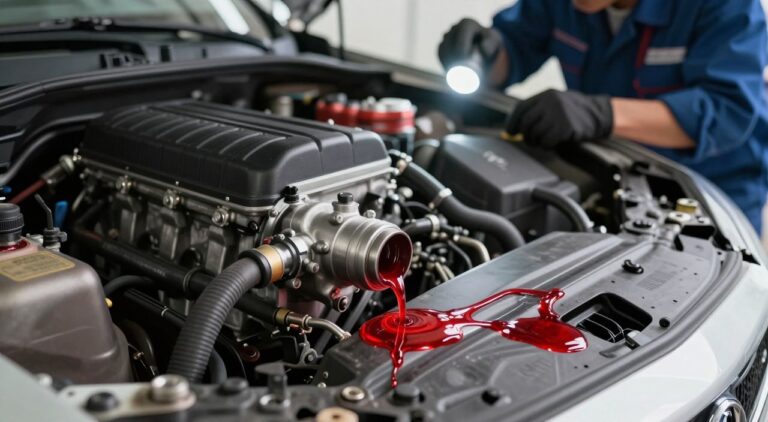
After the engine cools, shine a bright light on the cooling system. Look for white, crusty stuff that shows where fluid might have leaked.
Also, check the radiator, water pump, and heater hoses for dampness. A little moisture can mean a part is failing and causing the coolant level to drop.
Monitoring Coolant Levels Safely
To get the right info, mark the coolant level when it’s cold. Use a permanent marker.
Drive for a few days and check the mark again. This shows if coolant is really disappearing or if it’s just air in the system.
Keep a record of your findings. This helps you see how fast the coolant level drops. It makes your next steps more accurate.
Inspecting Internal Engine Components
If you see coolant loss without visible leak, it might be inside your engine. Dry hoses and radiators point to a deeper problem. You need to find out which part is failing.

Identifying Blown Head Gasket Symptoms
A blown head gasket is a common problem. It seals the engine block to the cylinder head. When it fails, coolant can leak into the oil or combustion chambers.
You might see milky oil in your engine. This means coolant mixed with oil. Also, white smoke from the exhaust is a sign of coolant burning.
Checking for Cracked Engine Blocks or Cylinder Heads
Cracks in the engine block or cylinder head are serious. They can happen from overheating or defects. Finding these cracks is hard without special tools.
Try a pressure test to check for damage. If pressure drops but no leaks are seen, coolant might be leaking inside. This usually means you need a professional to check the metal.
The Impact of Intake Manifold Gasket Failures
The intake manifold gasket can also cause problems. It seals the intake manifold to the cylinder head. If it fails, coolant can leak into the engine’s intake ports.
This issue might not cause overheating right away. But it will slowly lower your coolant levels. Fixing it early can prevent bigger engine damage.
| Component | Primary Symptom | Severity |
|---|---|---|
| Head Gasket | Milky oil or white exhaust smoke | High |
| Engine Block | Pressure loss without external drips | Critical |
| Intake Manifold | Slow, unexplained fluid consumption | Moderate |
Testing the Cooling System Pressure
If you’re having trouble with car coolant troubleshooting, a pressure test can help. It finds hidden leaks that are hard to see. When there’s mysterious coolant loss, the engine must be off to spot small drips.
Using a special tool, I can make these leaks show up. This lets me see them clearly.
Using a Cooling System Pressure Tester
A cooling system pressure tester is a handy tool. It attaches to your radiator or coolant reservoir. I pump the handle to build up pressure.
This pressure is like what happens when the engine gets hot. It lets me check hoses, connections, and the radiator for leaks.
Interpreting Pressure Drop Results
After pressurizing, I watch the gauge closely. If the needle drops fast, it means a big leak. This could be a split hose or a failing water pump seal.
If the pressure drops slowly, it might be a tiny leak. Or even an internal problem, like a failing head gasket.
The table below shows what these pressure changes mean for your car:
| Pressure Behavior | Likely Cause | Recommended Action |
|---|---|---|
| Rapid Pressure Loss | Large external leak | Inspect hoses and radiator |
| Slow Pressure Decay | Small leak or internal breach | Check oil and spark plugs |
| Stable Pressure | No cooling system leak | Investigate other systems |
Safety Precautions When Working with Pressurized Systems
When working with pressurized systems, safety is key. Always make sure the engine is cool before starting. Hot coolant can burn you badly.
Never open a pressurized system when the engine is hot. The steam can be very dangerous.
By following these steps, I can handle mysterious coolant loss well. This keeps my car running smoothly for a long time. Good car coolant troubleshooting needs patience and the right tools.
Analyzing Exhaust and Oil for Contamination
Wondering why your car loses coolant but shows no leak? Look at your oil and exhaust. Sometimes, the problem is inside the engine. Internal contamination is serious and needs quick action to avoid big damage.
Checking Engine Oil for Milky Discoloration
Check your engine oil to find coolant leaks. Pull the dipstick and look at the oil’s color and feel. If it’s milky, frothy, or light brown, coolant has mixed with the oil.
This mix looks like chocolate milk. It means your engine isn’t getting the right protection. You must fix this car coolant loss mystery fast to save your engine.
Observing Exhaust Smoke Patterns
Your exhaust system shows clues about your cooling system. Coolant turns to steam and makes thick, white smoke when it burns. This smoke comes out after the engine warms up.
You might smell something sweet behind your car. This smell means ethylene glycol is burning. Seeing these signs means a seal has broken.
Performing a Combustion Leak Test
Do a combustion leak test to be sure. This test uses a special fluid that changes color with carbon dioxide. If it turns yellow or green, it means exhaust gases are in your coolant.
This test is key to solving the car coolant loss mystery without taking apart the engine. It shows if you have a blown head gasket or a cracked cylinder head. Knowing why is my car losing coolant but no leak gets easier with these results.
| Symptom | Potential Cause | Severity |
|---|---|---|
| Milky Oil | Blown Head Gasket | Critical |
| White Exhaust Smoke | Coolant Combustion | High |
| Positive Leak Test | Cracked Engine Block | Critical |
| Sweet Exhaust Odor | Intake Manifold Leak | Moderate |
Evaluating Heater Core and Interior Issues
Sometimes, the reason for your car coolant disappearing is hidden deep within the dashboard. The heater core warms your cabin air. But, it can fail over time.
When it fails, it can leak fluid into your car’s air. This makes your air feel weird.
Signs of a Leaking Heater Core Inside the Cabin
The heater core is hard to see because it’s behind the dashboard. If your engine coolant vanish without puddles, it might be the heater core. Persistent loss of fluid often means it’s failing.
Detecting Sweet Smells and Foggy Windows
A sweet, syrupy smell inside means your heater core might be failing. This smell comes from the coolant. It smells like syrup because it’s heating up.
Also, your windshield might get foggy or greasy when you use the defroster. This is because coolant vapor is blowing onto the glass.
Inspecting Passenger Side Floor Mats for Dampness
If the leak is big, fluid will pool and overflow. Check the passenger side floor mats for dampness or moisture. If they’re wet or sticky, your car coolant disappearing is likely from a leaky heater core.
Fixing this engine coolant vanish fast is important. It stops damage and health risks from the fumes.
Professional Diagnostic Tools and When to Seek Help
When simple checks don’t work, professional tools can find the problem. If basic steps don’t solve it, it’s time for advanced tools.
Utilizing UV Dye for Hard-to-Find Leaks
For tricky leaks, UV fluorescent dye is a good choice. Just add it to your cooling system and let it go around the engine.
Drive for a bit, then shine a blacklight on the engine. The dye will light up, showing tiny leaks you can’t see. This method is very effective for finding leaks.
When to Consult a Certified Mechanic
DIY might not be safe or smart after a while. If your coolant level dropping unexpectedly keeps happening, get a mechanic fast.
Go to a pro if tests show engine damage, like a bad head gasket. They have tools like a cylinder leak-down tester. Don’t wait to ask for help when you’re unsure or out of tools.
The Risks of Ignoring Persistent Coolant Loss
Ignoring a problem is risky for your engine. Driving with a leaky system can cause it to overheat.
This can damage cylinder heads, gaskets, and even cause total engine failure. Fixing it quickly is key to keep your car safe and running well.
Conclusion
Keeping your car in good shape means watching the fluids closely. If your car’s coolant keeps going down, it might mean something serious is wrong.
I showed you why coolant might leak without you seeing it. Now you know how to tell if it’s just a small problem or something big.
Checking your fluids often can save you a lot of money. Catching problems early keeps your car running smoothly and avoids big repairs.
Make it a habit to check your coolant regularly. This way, your car will run well for a long time.
Tell us about your car’s coolant issues in the comments. Your stories can help others fix their problems before it’s too late.
FAQ
Why is my car losing coolant but no leak is visible on my driveway?
If your car loses coolant but you don’t see any puddles, it might be going inside. It could be getting burned up in the engine or mixing with oil. Usually, it goes out the tailpipe as vapor or mixes with oil.
What are the primary symptoms of an engine coolant vanish occurring inside the motor?
Look for white smoke from the exhaust and a sweet smell. Also, check if the oil looks milky or frothy. These signs mean coolant is leaking inside, like a blown head gasket.
How can I perform car coolant troubleshooting to find a hidden leak?
Use a cooling system pressure tester from Stant or Snap-on. It puts pressure on the system like a hot engine. This can show small leaks in hoses or the water pump.
Why is my coolant level dropping unexpectedly while I smell something sweet inside the cabin?
A sweet smell inside means the heater core is leaking. Check the floor mats for dampness or a greasy windshield. These signs mean the heater core has failed.
Is it dangerous to ignore a mysterious coolant loss if the engine isn’t overheating yet?
Yes, ignoring coolant loss is risky. It means the system can’t keep pressure, leading to engine failure. This can cause serious damage, like warped heads or a seized engine.
Can a bad radiator cap be the cause of why is my car losing coolant but no leak is found?
Yes, a bad radiator cap can cause coolant loss. A worn-out seal lets coolant escape as steam. This creates a mystery because there’s no puddle.
How does a combustion leak test help solve the car coolant disappearing act?
A combustion leak detector kit shows if exhaust gases leak into the cooling system. If it turns yellow or green over the radiator, it means a head gasket failure. This test is very reliable for finding hidden leaks.
What should I do if I find UV dye in my oil during car coolant troubleshooting?
Finding UV dye in the oil means there’s an internal leak. This could be a cracked block or a failed intake manifold gasket. At this point, get a mechanic to see if the engine can be fixed or needs a rebuild.