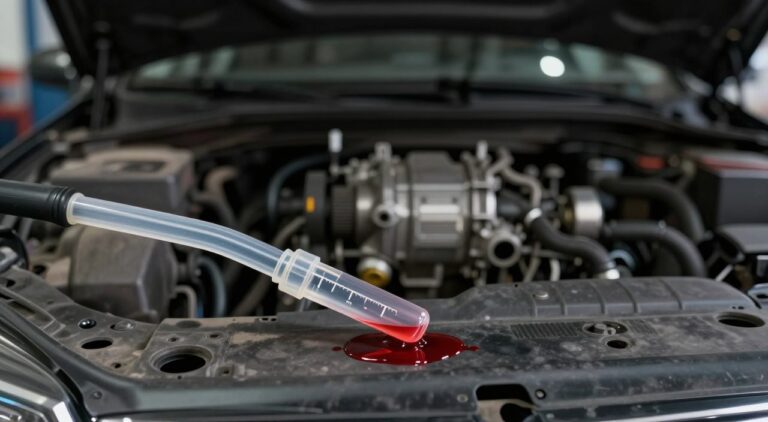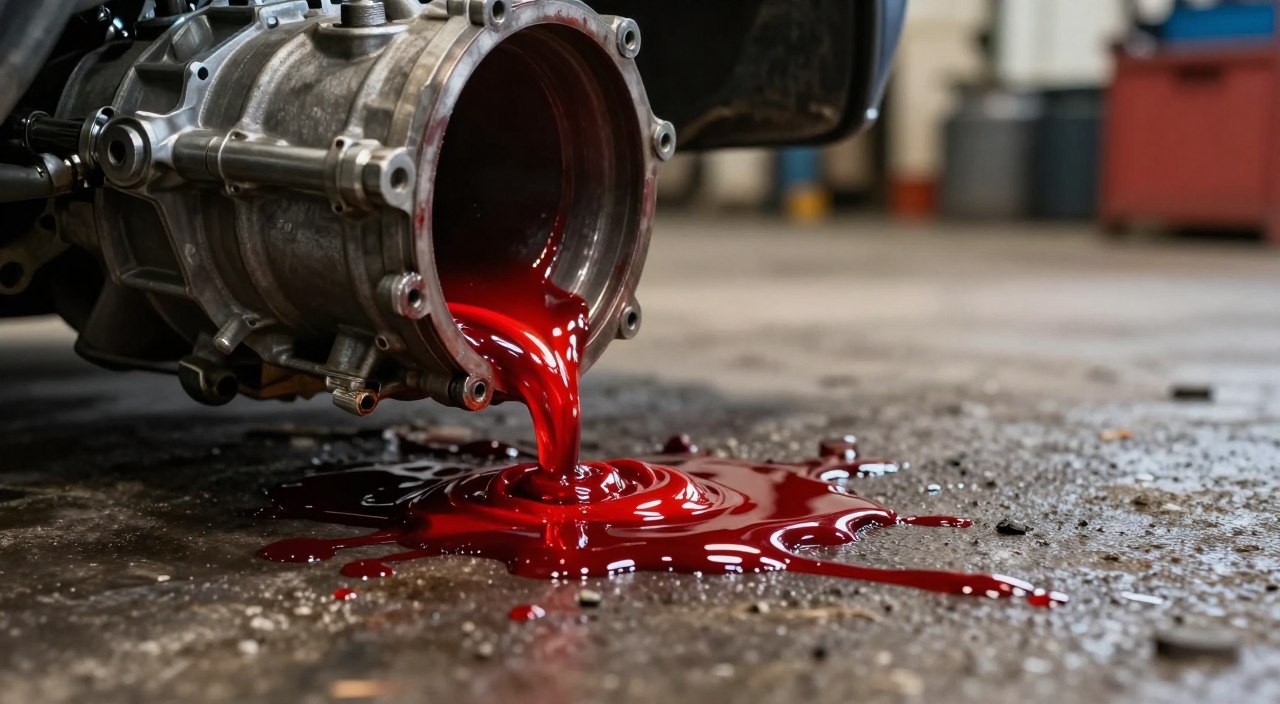
Red fluid leaking near transmission signs and solutions
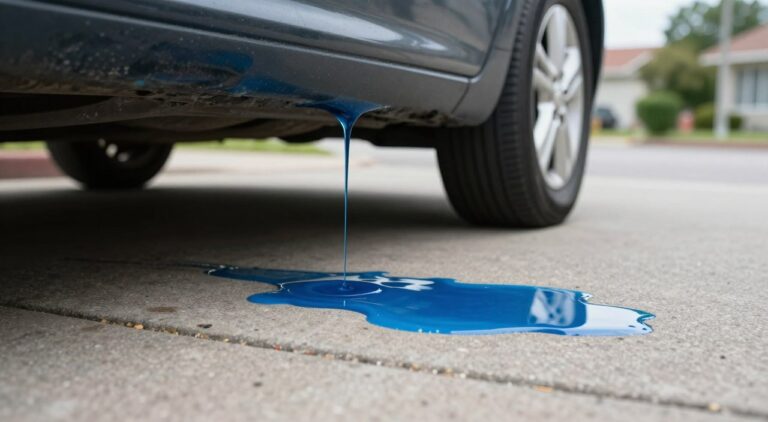
Seeing a bright puddle under my car makes me very worried. When I see red fluid leaking near transmission parts, I worry about the repair cost. It’s a common problem, but it’s a big warning sign I must not ignore.
Early detection helps stop small leaks from becoming big problems. By noticing these signs early, I can avoid costly repairs. I want to help you understand how to keep your car healthy.
In this guide, I’ll show you how to find the problem’s source. I’ll also talk about professional fixes to keep your car running well. Acting fast is key to protect your car and your safety.
Key Takeaways
- Identify the specific color and consistency of the puddle to confirm the source.
- Check your vehicle’s fluid levels regularly to catch drops before they become major issues.
- Understand that early intervention prevents long-term damage to internal components.
- Learn the common diagnostic steps to determine if a professional mechanic is needed.
- Prioritize safety by addressing potential mechanical failures as soon as they appear.
Identifying Red Fluid Leaking Near Transmission
When I see red fluid leaking near transmission, I act fast. Finding a puddle on my garage floor is scary. But, I stay calm to check it out well.

Distinguishing Transmission Fluid from Other Automotive Fluids
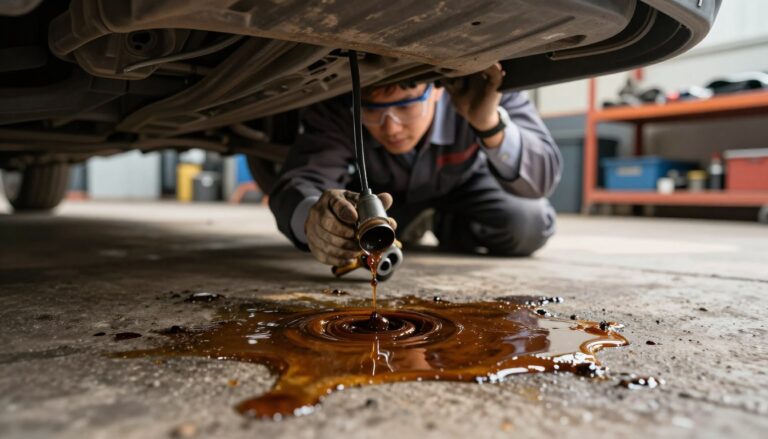
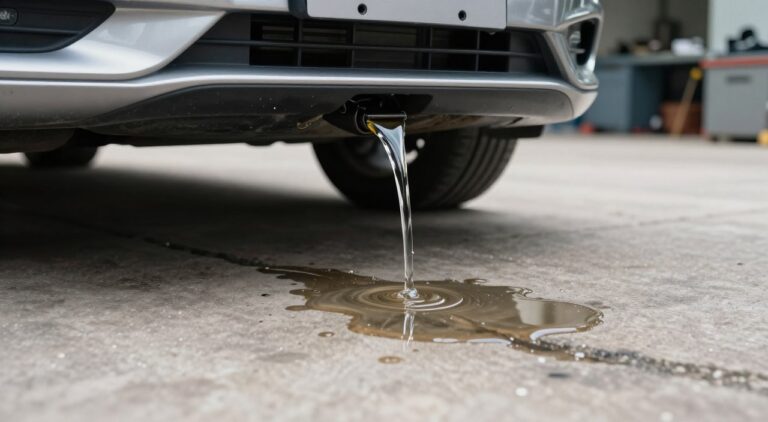
I need to tell transmission fluid from other car liquids. Engine oil is brown or black. Coolant is green, orange, or pink.
Transmission fluid is bright red when new.
Brake fluid is clear or light yellow and feels different. By comparing, I can find the problem area. Good transmission fluid leak detection starts with looking at the color and feel.
The Importance of Color and Texture in Leak Detection
The fluid’s look tells me about my transmission’s health. Fresh fluid is bright red and smooth. If it’s dark brown or smells like burnt toast, it’s running too hot.
I check its feel by touching it. If it’s gritty, it means wear inside. Spotting these signs early helps me know what to do next.
Locating the Source of the Leak Under Your Vehicle
To find where the leak is, I lift my car safely. I use a jack and jack stands. Never crawl under a car on a hydraulic jack alone.
Once safe, I look at the transmission pan, cooling lines, and bell housing. I search for wet spots or drips from bolts and seals.
Fluid can travel along the frame before hitting the ground. By following the red fluid leaking near transmission parts, I find the broken gasket or seal.
Common Symptoms of a Transmission Fluid Leak
Spotting transmission fluid leak symptoms early helps keep my transmission safe. When fluid levels go down, my gearbox’s parts start to have trouble. This makes my car act differently.

«An ounce of prevention is worth a pound of cure when it comes to maintaining the complex mechanical heart of your vehicle.»
Changes in Gear Shifting Performance
My car feels off when the fluid is low. I might feel hesitation or slow shifting from park to drive.
Driving at high speeds can make gears feel like they’re slipping. Shifting becomes jerky or unpredictable. This is a big warning sign for my transmission.
Unusual Noises During Acceleration or Deceleration
My ears help me figure out problems. Grinding or whining noises during acceleration mean the gears are dry. This is because of a transmission fluid leak.
These sounds happen when metal parts rub together without fluid. I should listen to these sounds. They tell me my transmission is wearing out.
Overheating Indicators on Your Dashboard
An overheating warning on my dashboard is a big red flag. The fluid helps keep the transmission cool. Without enough, it gets too hot.
- Check the temperature gauge often during long drives.
- Look for the transmission warning light on the dashboard.
- Stop safely if the engine or transmission gets too hot.
Ignoring these signs can cause big problems. I always check my fluid levels if I think there’s a potential leak. This keeps my car running well.
Primary Causes of Transmission Fluid Leaks
A transmission fluid leak often comes from wear and tear. This happens when parts that hold fluid start to break down. They get damaged from heat and movement. Knowing why these leaks happen helps fix them early.

Worn Out Transmission Pan Gaskets
The gasket in the transmission pan keeps fluid inside. It gets hard and cracks from heat. When it does, fluid leaks out, making a mess.
Damaged or Cracked Transmission Lines
I check the lines that carry fluid to the cooler often. They can get damaged by rocks, rust, or bumps. Even a small hole can cause a slow leak.
Faulty Torque Converter Seals
The torque converter needs a special seal to work right. If it fails, fixing it is hard. I always suggest a pro to find and fix the leak first.
| Component | Primary Cause | Severity |
|---|---|---|
| Pan Gasket | Heat degradation | Moderate |
| Transmission Lines | Corrosion or impact | High |
| Torque Converter Seal | Internal pressure failure | Critical |
The Role of Transmission Fluid in Vehicle Health
I’ve learned that transmission fluid does more than just keep gears moving. It’s the lifeblood of my vehicle’s gearbox. It makes sure every shift is smooth and quick. Knowing why fluid leaks is key to keeping my car running right.

How Fluid Lubricates and Cools Internal Components
My transmission uses this special fluid to protect moving parts. It stops metal from rubbing against metal. This reduces friction a lot, so gears can move smoothly.
The fluid also carries away heat. This keeps the transmission cool and working well.
The Impact of Low Fluid Levels on Transmission Longevity
Low fluid levels hurt my transmission’s parts. Without enough fluid, it can’t handle heat well. This makes seals and clutches wear out fast.
Keeping the right amount of fluid is key. It helps my car last longer.
Why Ignoring a Small Leak Leads to Major Repairs
It’s easy to ignore a small leak. But, a small drip can mean big trouble. If I ignore it, my transmission might fail.
Fixing a broken transmission is very expensive. Catching a leak early saves money and keeps me worry-free.
Step by Step Guide to Checking Your Transmission Fluid
Keeping my car in good shape starts with checking the transmission fluid. This simple check helps avoid big repairs and spots transmission fluid leak symptoms early. Just a few minutes under the hood keeps my car running well.
Preparing Your Vehicle for a Fluid Level Inspection
I make sure my car is parked on perfectly level ground before starting. This is key to get an accurate reading. I also let the engine warm up, as hot fluid expands.
Idling the engine for a bit helps the fluid mix well. Checking it when cold might show a lower level. Always use the parking brake first.
Reading the Dipstick Correctly
When the engine is warm, I find the transmission dipstick. It has a bright handle. I clean it with a cloth and put it back in.
Then, I pull it out again to see the fluid level. If it’s below the «Full» mark, I need to fix it fast. Adding too much fluid can harm the system. Precision is key when adding more.
Evaluating Fluid Condition and Smell
I also check the fluid’s color and smell. Good fluid is a bright, translucent red. Dark or black fluid means it’s burnt from overheating.
A burnt or acrid smell means something’s wrong inside. Spotting these signs early helps avoid big problems. It’s a sign to get professional help fast.
Tools Needed for Transmission Fluid Leak Detection
For transmission fluid leak detection, the right tools are key. When I see a puddle under my car, I don’t guess. I use special equipment to find the leak. The right tools help me fix it fast.
Using UV Dye Kits for Hard to Find Leaks
UV dye kits are my go-to for tough leaks. They add a glow to the fluid, making small leaks show up under a blacklight. This trick is invaluable for finding slow drips.
Essential Safety Gear for Under-Car Inspections
My safety comes first when I work under the car. I wear protective gloves and impact-resistant eye gear. They keep me safe from hot fluids and sharp parts.
Diagnostic Scanners for Transmission Error Codes
Modern cars are complex. I use diagnostic scanners to find error codes. These tools help me find the problem quickly. This makes transmission fluid leak detection easier.
| Tool Name | Primary Function | Difficulty Level |
|---|---|---|
| UV Dye Kit | Visual leak tracing | Beginner |
| Safety Gear | Personal protection | Essential |
| OBD-II Scanner | Code analysis | Intermediate |
Professional Repair Options Versus DIY Solutions
Choosing the right path for transmission maintenance is important. I need to know if the leak is small or big. If it’s big, I might not be able to fix it myself.
When to Attempt a Gasket Replacement Yourself
If the leak is from a simple gasket, I might try to fix it myself. This means draining the fluid and putting in a new seal. It is essential to use the right torque to avoid leaks later.
Fixing a leak at home can save money. But, I need to be careful and have the right tools. If I’m not careful, I could make things worse.
Understanding Transmission Fluid Leak Repair Cost Estimates
Knowing the cost of fixing a leak is important. Simple fixes are cheap, but bigger problems cost more. I should look up prices to make sure I’m getting a good deal.
I also need to think about the cost of new fluid. This is important to fill the system after fixing it. Unexpected costs can happen, so having a budget helps.
Knowing When a Professional Mechanic is Necessary
There are times when I need a professional mechanic. If the leak is in hard-to-reach places, I should let a pro do it. Trying to fix it myself can damage my car and void the warranty.
A certified mechanic has the right tools to find and fix the leak fast. They make sure it’s done right the first time. This is best for my car’s health.
| Repair Type | Complexity | Estimated Cost | Risk Level |
|---|---|---|---|
| Pan Gasket | Low | $150 – $300 | Low |
| Transmission Line | Medium | $200 – $500 | Moderate |
| Internal Seal | High | $800+ | High |
Preventative Maintenance to Avoid Future Leaks
Putting in a little effort today can save a lot of trouble tomorrow. I think being proactive with maintenance is key. It helps avoid the stress of sudden car problems. By focusing on transmission fluid leak prevention, my car stays reliable and safe.
Regular Transmission Fluid Flushes and Filter Changes
I always make time for regular fluid flushes and filter changes. This keeps my car’s system clean and free of bad stuff. Clean fluid makes sure seals work well, which is important for my car’s health.
With fresh fluid, my car runs better and doesn’t overheat. I see these services as a way to make my car last longer. I’d rather fix things before they break, not after.
Monitoring Your Vehicle for Early Warning Signs
I check my car for fluid leaks often. Finding a small leak early is easier than fixing big problems. If I see a tiny spot, I check it right away.
Being careful helps me catch problems early. I check the fluid’s color and smell during inspections. Consistency is key for a healthy car.
The Benefits of Using High Quality Seal Conditioners
Over time, car seals can dry out and crack. I use special seal conditioners to keep them working well. These products keep seals soft and prevent leaks.
Using these products is a smart choice. It’s a cost-effective measure that makes me feel safe driving. By following these steps, my car stays in great shape for years.
Specific Considerations for Different Vehicle Makes
Knowing where a car might leak can save a lot of time and money. Each car maker designs their transmissions differently. This means leaks can happen in unique ways. Knowing this helps me guess how much fixing a leak will cost before I see a mechanic.
Common Leak Points in Ford F-150 Transmissions
When I check my Ford F-150, I look at certain seals closely. These seals can wear out, causing leaks. Checking these connections often helps stop big fluid losses.
Addressing Transmission Issues in Toyota Camry Models
Toyota Camry models have their own leak spots. I watch for leaks around the axle seals. Finding these small leaks early stops big problems later.
Handling Fluid Leaks in Honda Civic Vehicles
For my Honda Civic, I check the transmission pan gasket and drain plug washer. These parts often leak, leading to expensive damage. Fixing these early keeps repair costs down and my car running well.
Conclusion
When I see red fluid under my car, I act fast. This keeps my Ford, Toyota, or Honda safe. I’m now good at spotting trouble signs.
Preventing transmission fluid leaks is key. I check my car often. Small leaks can mean big problems inside.
Regular care keeps my car running well. I do maintenance to avoid big repairs. I want everyone to take care of their car’s transmission.
I’m ready to keep my car in top shape. Fixing leaks early keeps my engine strong. I’m excited for many years of driving without issues.
FAQ
What does it mean if I find red fluid leaking near the transmission of my vehicle?
If I see a bright red puddle near the transmission, it’s likely ATF. Ford and Toyota use red dye in their ATF. This makes it easy to tell it apart from engine oil or coolant.Finding red fluid means a seal or gasket is broken. I need to fix it right away.
What are the most common transmission fluid leak symptoms I should look out for while driving?
I notice slipping gears, where the car doesn’t move fast even when the engine does. I also see delays when shifting gears.Grinding or whining sounds and an overheating light on the dashboard are signs too. These happen because of too much friction in the gearbox.
What are the primary transmission fluid leak causes?
Rubber or cork parts wearing out is a big reason for leaks. This includes a bad transmission pan gasket or seals.Cracked lines from heat and debris can also leak. Sometimes, a faulty torque converter seal is the problem.
How can I perform effective transmission fluid leak detection at home?
I check the fluid levels with the dipstick when the engine is warm. For tough cases, I use UV dye kits.I add dye, drive a bit, and then use a blacklight to find the leak. This method is more accurate than just looking where the fluid drips.
What is the typical transmission fluid leak repair cost I should expect?
The cost depends on the problem and my car. Replacing a pan gasket costs $150 to $350 at a shop.But, fixing a front pump seal or torque converter can cost $800 to $1,000 because it’s harder work.
Can I learn how to fix a transmission fluid leak myself, or should I see a professional?
If the leak is from the pan gasket or a cooling line, I can fix it myself. I just need basic tools and a service manual.But, if it’s an internal leak, I should get a pro. They ensure the repair is done right and keeps my warranty valid.
What is the best strategy for transmission fluid leak prevention?
Keeping up with regular maintenance is key. I flush and change the transmission fluid and filter often.Using products like Mobil 1 or Valvoline ATF helps. Also, using a seal conditioner keeps gaskets from drying out and cracking.