Tire Pressure Light Flashing Meaning and What to Do
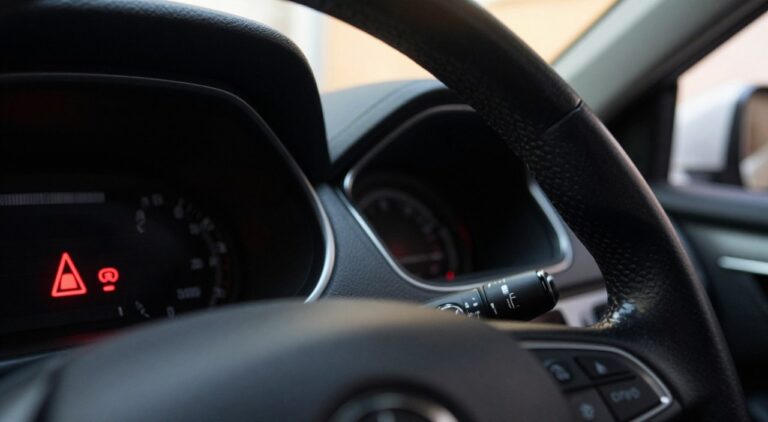
I feel a sudden panic when a dashboard light starts blinking while I’m driving. It’s a common problem for many drivers. But knowing what the tire pressure light flashing meaning is is very important for your safety.
Your car has a system called TPMS to check air levels in your tires. If it finds a problem, it tells you right away. But, there’s a big difference between a little air loss and a big problem.
If you see this warning, don’t ignore it. I want to help you deal with it confidently. We can figure out if you need to see a mechanic or just add air at a gas station. Let’s find out how to handle this warning well.
Understanding the Tire Pressure Light Flashing Meaning
If you’re wondering what does tire pressure light flashing mean, you’re not alone. Many drivers get worried when a warning light shows up on their dashboard. But, knowing what these lights mean is key to keeping your car safe.

Understanding tire pressure light behavior is easy once you know the difference. A steady light means your tires might be low. But a blinking light means there’s a problem with the system itself.
Distinguishing Between Solid and Flashing Indicators
The main thing to notice is the light’s pattern. A steady light usually means your tires need air. But a blinking light means there’s a problem with the system.
| Indicator State | Primary Meaning | Recommended Action |
|---|---|---|
| Solid Light | Low Tire Pressure | Check and inflate tires |
| Flashing Light | System Malfunction | Visit a professional mechanic |
| No Light | System Normal | Continue driving safely |
Why the TPMS System Triggers a Warning
The Tire Pressure Monitoring System (TPMS) checks your tire air levels. It uses sensors in each wheel to send data to your car’s computer. The computer checks if the air pressure is right.
When the system shows a tire pressure light flashing meaning, it usually means a sensor problem. The computer can’t get a signal, so it warns you. Reliable data transmission is key for the system to work right.
Initial Steps When You Notice the Blinking Light
When I see the tire pressure light blinking on my dashboard, I focus on safety. It’s natural to feel worried, but staying calm helps me make better choices. My main goal is to pull over safely and quickly.

Pulling Over Safely in Traffic
I look for a wide shoulder or a parking lot to check my car. Stopping in active lanes is dangerous for everyone. When I find a safe spot, I turn on my hazard lights to warn others.
I try to park on level ground for a quick look. Keeping a safe distance from traffic is key. This step keeps me safe while I check my tire pressure warning light.
Checking Your Dashboard for Secondary Alerts
After stopping safely, I check my dashboard for more info. Modern cars show error codes or messages. These help me know if it’s just low pressure or a bigger problem.
I look for messages like «Check TPMS System» or where the problem is. Knowing this helps me decide if I can keep driving or need help. Here’s what I do when I see a tire pressure warning light.
| Action Step | Priority Level | Reasoning |
|---|---|---|
| Activate Hazards | High | Alerts nearby drivers |
| Exit Traffic | Critical | Ensures personal safety |
| Check Dashboard | Medium | Identifies specific faults |
| Visual Inspection | Medium | Confirms physical damage |
The Technical Difference Between Low Pressure and System Faults
Understanding the tire pressure monitoring system is key. A tire pressure light blinking means something specific. It’s a message for your dashboard.

How the Tire Pressure Monitoring System Operates
Modern cars have special sensors in each wheel. They check air levels and temperature. Then, they send this info to the car’s computer.
The computer watches these signals closely. It checks if they’re right. If not, it alerts you to a possible safety issue.
Identifying Sensor Malfunctions Versus Actual Pressure Loss
Knowing the difference between a blinking and a solid light is important. A solid light means a tire is low. This could be due to a leak or temperature change.
A blinking light usually means a system fault. This can happen if a sensor battery dies or gets damaged. Or if the receiver can’t get the signal.
If the light blinks for a minute before staying solid, it’s a sign. The system can’t talk to a sensor. You’ll need a pro to find and fix the problem.
Step-by-Step Guide to Inspecting Your Tires
I find that the most reliable way to address a tire pressure warning light is to get out and inspect the tires myself. Modern technology is helpful, but nothing beats a physical check. This ensures your vehicle is safe for the road.

Locating the Recommended PSI on the Door Jamb
Before you start, you must know the correct inflation level for your specific vehicle. Always check the manufacturer’s sticker on the driver-side door jamb. This is better than the numbers on the tire sidewall.
This sticker gives you the exact PSI needed for your tires. Following these factory specs ensures your car handles well and gets good gas mileage.
Using a Reliable Tire Pressure Gauge
A low tire pressure warning often happens because of slow leaks or temperature changes. Use a high-quality digital or pencil-style tire pressure gauge for an accurate reading.
Manual Gauge Techniques for Accuracy
For the best results, make sure your tires are «cold.» This means the car has been parked for at least three hours. Remove the valve cap, press the gauge firmly onto the valve stem, and listen for a brief hiss.
If you don’t hear a hiss, press harder to create a proper seal.
Visual Inspection for Nails or Punctures
After checking the pressure, walk around the vehicle. Look closely at the tread and sidewalls for any embedded nails, screws, or sharp debris. Even a small puncture can trigger a low tire pressure warning if it causes a slow leak.
| Condition | Visual Sign | Action Required |
|---|---|---|
| Normal | Even tread wear | Maintain current PSI |
| Puncture | Nail or screw head | Visit a repair shop |
| Low Pressure | Bulging sidewall | Inflate to door jamb PSI |
| Sensor Fault | No visible damage | Professional diagnostic |
If you notice any deep cuts or bulges in the sidewall, do not drive on that tire. These structural issues are dangerous. They need immediate professional attention to clear your tire pressure warning light permanently.
Troubleshooting Common TPMS Sensor Issues
Many drivers are surprised to find out that tire pressure sensor light problems often come from simple issues. These systems are very reliable but can still wear out from daily use. Knowing how they work helps me figure out why they might show a warning, even when my tires look good.
Battery Life Limitations in Modern Sensors
Most TPMS sensors use small, non-replaceable lithium batteries. These batteries last about five to ten years before they run out. When the battery dies, the sensor can’t send data to your car’s computer. This usually makes the tire pressure indicator light on your dashboard turn on.
Environmental Factors Affecting Sensor Performance
Things outside your car also affect how well these sensors work. Moisture, road salt, and extreme heat can damage the sensor or mess with its signal. Driving through deep puddles or harsh winter weather can cause problems with your system.
Cold Weather Impacts on Tire Pressure
Cold weather is a big reason for false warnings. When it gets cold, the air in your tires gets tighter, making the pressure drop. This drop in pressure often makes the tire pressure indicator light turn on, even if there’s no leak.
| Issue Type | Common Symptom | Likely Cause |
|---|---|---|
| Battery Failure | Constant flashing light | End of service life |
| Cold Weather | Light on during morning | Natural air contraction |
| Sensor Corrosion | Intermittent alerts | Moisture or road salt |
| Signal Interference | Erratic sensor readings | External electronic noise |
If your tire pressure sensor light stays on even after you’ve checked your tire pressure, it’s a sign of a problem. Watching out for these issues helps me keep my car safe.
Resetting the Tire Pressure Monitoring System
Clearing the tire pressure indicator light is easy for most cars. First, make sure all tires are at the right pressure. Then, the system needs a signal to know the new pressure.
Following the steps for your car’s make and model helps the light go off right.
Standard Reset Procedures for Toyota Camry Models
For many Toyota Camry models, the reset button is under the steering wheel or in the glove box. Turn the ignition to «On» but don’t start the engine. Press and hold the reset button until the tire pressure indicator light blinks three times slowly.
After it blinks, wait a few minutes with the ignition on. This lets the system calibrate. When it’s done, the light should stay off while you drive. If it doesn’t, try again carefully.
Using the Steering Wheel Menu on a Ford F-150
Modern Ford F-150 trucks reset the system through the digital display. Use the directional pad on the left side of the steering wheel to get to the settings menu. Look for «Settings,» then «Driver Assist,» and then «Tire Monitor.»
On the tire monitor screen, choose to reset the system. The truck will ask you to confirm. The tire pressure indicator light will go off once the sensors sync with the computer. This method is easier than older cars.
When a Manual Reset Fails to Clear the Light
If the tire pressure indicator light stays on after trying to reset, there’s a bigger problem. It might be a dead sensor battery or a damaged valve stem. Sometimes, the vehicle’s module can’t get signals from the wheels.
Check the table below to see which reset method works for you. If it doesn’t, you might need more help.
| Vehicle Type | Primary Reset Method | Common Issue |
|---|---|---|
| Toyota Camry | Physical Reset Button | Sensor Battery Life |
| Ford F-150 | Steering Wheel Menu | Communication Fault |
| General Sedan | Drive Cycle (20+ mph) | Damaged Valve Stem |
| Heavy Duty Truck | OBD-II Diagnostic Tool | Sensor Sync Error |
If the light keeps flashing or is solid, it’s time to get help. It usually means a sensor needs to be replaced.
Professional Diagnostic Tools and When to Visit a Mechanic
A tire pressure sensor light can mean a big problem. It might need special tools to fix. If you can’t get rid of the light, it’s time to see a mechanic.
Using an OBD-II Scanner for TPMS Codes
Experts use OBD-II scanners to talk to your car’s computer. These tools find exact trouble codes. This helps avoid guessing what’s wrong.
These scanners do more than basic readers. They can make sensors send data. If a sensor isn’t detected, it’s a hardware problem, not just a glitch.
Recognizing When a Sensor Needs Replacement
Most sensors have a battery that lasts five to ten years. When it dies, the tire pressure sensor light won’t go away. It also stays on even when tires are fine.
Damage from accidents or tire changes can also cause problems. If a sensor is broken, you need a new one to fix the system.
The Cost of Professional TPMS Repair
Knowing the cost of repairs is key. Prices change based on where you are and your car. Replacing all sensors at once might be cheaper for older cars, as others might fail soon.
| Service Type | Estimated Cost Range | Primary Benefit |
|---|---|---|
| Diagnostic Scan | $50 – $100 | Pinpoints exact fault |
| Single Sensor Replacement | $150 – $250 | Restores specific wheel |
| Full System Re-learn | $40 – $80 | Syncs new sensors |
| Complete Set Replacement | $500 – $800 | Prevents future failures |
Safety Risks of Driving with a Flashing Warning Light
Driving with a low tire pressure warning is risky. It can harm my car and me. These warnings are usually real and ignoring them can cause big problems.
Handling Characteristics and Braking Performance
My car’s grip on the road depends on my tires. Low pressure makes the car hard to turn. Precise steering becomes difficult, and it might pull to one side.
Braking also gets worse with low pressure. A low tire pressure warning means my tires can’t handle weight evenly. This makes stopping longer, which can be dangerous.
«Safety is not just about the driver; it is about the equipment that connects the vehicle to the road. Neglecting tire health is a direct threat to everyone on the highway.»
Long-term Effects on Tire Tread Wear
Driving on under-inflated tires wears them down fast. The edges wear more than the center. This ruins the tire’s shape.
This damage can’t be fixed. I have to replace my tires early. This costs a lot of money.
Fuel Efficiency Consequences of Improper Inflation
Ignoring a low tire pressure warning costs me money at the gas pump. Under-inflated tires make my car work harder. This means I use more fuel.
- Increased rolling resistance leads to higher fuel consumption.
- Frequent stops at the gas station become a regular burden.
- Long-term fuel costs can add up to hundreds of dollars annually.
Keeping my tires at the right pressure saves money. It also keeps my car running well for a long time.
Preventative Maintenance for Your Tire Monitoring System
Keeping up with maintenance helps avoid sudden warnings on your dashboard. It keeps your tire pressure monitoring system working well all year.
Rotating Tires and Sensor Re-learning
It’s important to rotate your tires for even wear and balance. But, moving tires can mess with the tire pressure monitoring system if sensors aren’t reset.
When you get your tires rotated, make sure the tech resets the sensors. This lets your car’s computer know where each sensor is. This way, the dashboard will show the right tire if it’s low.
Checking Tire Pressure During Seasonal Changes
Changes in temperature affect your tire’s air pressure. Always check your pressure when the seasons change, like from summer to winter.
For every 10-degree drop in temperature, your tires lose about one PSI. Checking pressure ahead of time stops the tire pressure monitoring system from giving false warnings in cold weather.
Keeping Spare Tires Properly Inflated
Many cars have a sensor in the spare tire too. It’s easy to forget about it until you need it in an emergency.
Make sure to check your spare tire every month. Keeping it inflated means you’re ready for a flat without extra dashboard lights.
| Maintenance Task | Frequency | Benefit |
|---|---|---|
| Tire Rotation | Every 5,000 miles | Even tread wear |
| Pressure Check | Monthly | Optimal fuel economy |
| Sensor Re-learn | After rotation | System accuracy |
| Spare Tire Check | Quarterly | Emergency readiness |
Conclusion
Understanding your car’s tire pressure light is key to good car care. Drivers who watch their dashboard alerts feel safer on the road. Now, you know when to just add air and when to check the sensor.
I want your car to run smoothly. Regular checks keep your tires in great shape for a long time. This way, small issues don’t become big, costly problems.
Always have a good pressure gauge in your car. Checking your tires often helps save fuel and keeps you safe. Tell others about the importance of these dashboard alerts.
FAQ
What does tire pressure light flashing mean compared to a solid light?
A flashing tire pressure light means there’s a problem with the system. It’s not just about low tire pressure. It could be a sensor failure or a dead battery.
What should I do immediately when I see the tire pressure light blinking while driving?
First, pull over safely. Then, check the dashboard for more messages. Look for a visual sign of a leak or flat tire.
Can cold weather trigger a low tire pressure warning?
Yes, cold weather can make the light turn on. This is because air gets colder and contracts. It’s not a system failure, just a need for air.
How can I distinguish between a genuine pressure loss and a sensor malfunction?
Use a good tire pressure gauge. If all tires are at the right pressure but the light stays on, it’s a system fault. This saves me from worry.
How do I reset the system after adjusting my tire pressure?
Resetting varies by car. For a Toyota Camry, use the dash settings or a reset button. On a Ford F-150, use the steering wheel controls. If the light keeps flashing, a sensor needs fixing.
Is it dangerous to ignore a tire pressure sensor light?
Ignoring the light is risky. It can cause a blowout and affect handling and braking. It also wastes fuel and wears out tires faster.
What is the typical lifespan of the batteries in a tire pressure monitoring system?
TPMS batteries last about five to ten years. When they die, the sensor can’t send data. This means you need a new sensor.
What does it cost to have a professional fix a flashing tire pressure light?
Fixing a faulty sensor costs $50 to $150 per wheel. A mechanic will find the exact problem. This saves money by fixing only what’s broken.