Vibrating Noise Under Car When Accelerating Causes
Ever felt a sudden shudder or heard a weird sound when you press the gas? A vibrating noise under car when accelerating is a big problem for many drivers. It means something in your car’s parts needs help right away.
These car troubles can really stress you out, right? Spotting these problems early is the smartest way to avoid big repair costs. By fixing small issues now, you keep your car’s important parts safe.
I want to help you find out what’s wrong. We’ll look at the main causes and when you should see a mechanic. Let’s make your car run smoothly again.
Key Takeaways
- Spotting early signs saves you money on big repairs.
- Drivetrain issues often show up as shaking when you speed up.
- Ignoring these signs can cause serious car failures.
- Getting the right diagnosis helps figure out if it’s the tires, axles, or engine.
- Regular car care is the best way to avoid sudden vibrations.
Understanding the Mechanics of Acceleration Vibration
When you press the gas pedal, a lot happens. Power goes from the engine to the wheels. Any problem in this path can cause car vibration when driving.
Your car needs everything to spin smoothly. If axles or driveshafts spin off-center, you feel a shake. This is because something is not balanced right.

It’s key to know the difference between normal road feel and a real problem. Normal road feel changes with the road. But if your car persistent vibrates at certain speeds, it might mean something’s wrong.
«A machine is only as reliable as the sum of its moving parts; when one link in the drivetrain falters, the entire system pays the price.»
When you’re driving under load, vibrations get worse. The engine pushes harder on the drivetrain. This shows up problems in mounts, joints, or bushings that might not be seen when driving steady.
Common Causes of Vibrating Noise Under Car When Accelerating
When my car shakes when I press the gas, I look for common problems. A vibrating noise under car when accelerating means something is not working right. Finding out what it is helps me fix it faster.

Worn CV Joints and Axle Issues
The Constant Velocity (CV) joints help power go to the wheels. When they wear out, you might feel a shake. This shake is a big clue.
Damaged Engine or Transmission Mounts
Many wonder what causes car to vibrate when accelerating. Often, it’s because mounts are failing. These mounts keep the engine stable. If they break, the engine moves too much, causing a strong shake.
Exhaust System Leaks and Loose Hangers
At times, the problem is in the exhaust system. If a hanger breaks, the exhaust pipe hits the frame. This makes a loud, shaking vibrating noise under car when accelerating that sounds like something’s wrong.
Tire Imbalance and Suspension Wear
I also check the tires and suspension. A bad tire or worn-out parts can make the car shake. Knowing what causes car to vibrate when accelerating helps me figure out if it’s a tire problem or something bigger.
Step One: Performing a Preliminary Visual Inspection
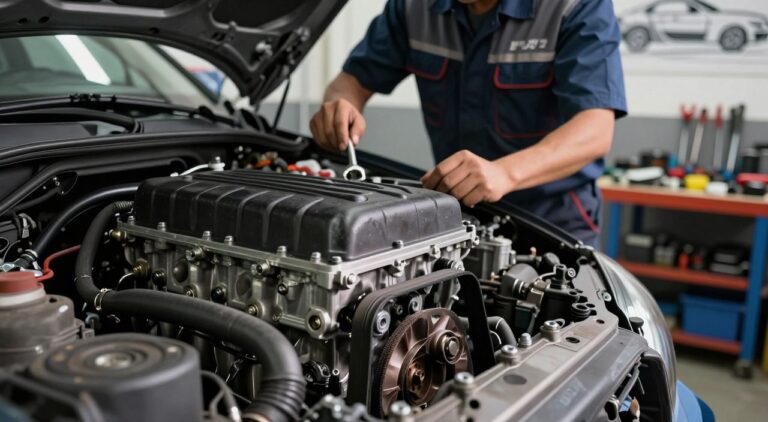
If your car shakes while accelerating, start by looking under the car. It’s wise to check the basics first. This helps find simple problems that are easy to fix.

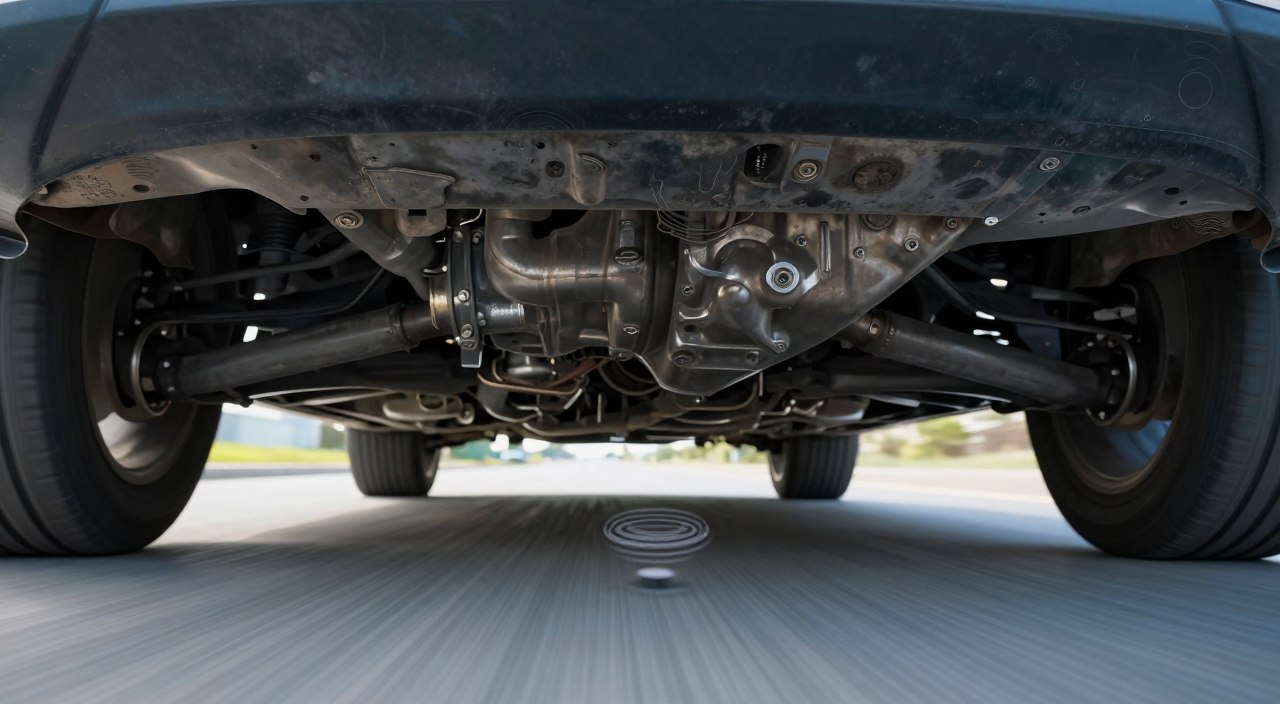
Checking for Visible Damage Under the Chassis
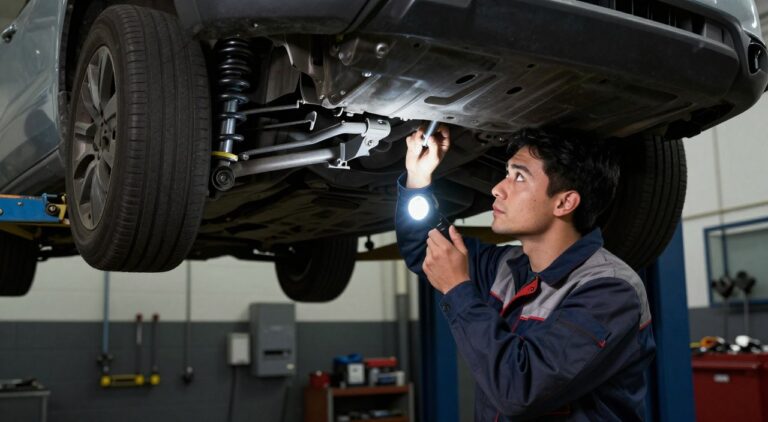
Slide under your car with a bright light to see the parts that move. Look at the rubber CV boots near the wheels. If they’re torn or leaking, they might be the problem. A damaged boot lets dirt in, which can cause parts to fail.
Also, check the exhaust system while you’re down there. A loose or broken exhaust pipe can shake against the car. Make sure all clamps are tight and pipes aren’t touching the car.
Inspecting Tires for Uneven Wear Patterns
Check your tires when you feel your car shaking while accelerating. Run your hand over the tire tread to feel for uneven wear. If it feels bumpy, your car might have alignment or suspension problems.
Tire problems can cause a shaking feeling that gets worse as you go faster. Fixing these problems early can save your car’s parts. Here’s what you might find during your inspection.
| Component | Visual Sign | Potential Issue |
|---|---|---|
| CV Boots | Torn rubber or grease spray | Joint contamination |
| Exhaust | Broken or missing hangers | System vibration |
| Tires | Cupping or uneven tread | Alignment or balance |
| Suspension | Leaking struts or shocks | Damping failure |
Step Two: Evaluating the Drivetrain and Axle Components
If your car vibrating at certain speeds, check the axle and drivetrain. These parts can cause trouble. A few simple checks can show if they’re the problem.

Testing CV Joint Play and Boot Integrity
CV joints are key for power to your wheels. Worn-out joints can make your car shudder. Lift the car and check the axle shaft for play.
Look at the rubber boots while you’re under the car. Grease around the wheel well means the boot is torn. A torn boot lets dirt in, causing the car to shake at high speeds.
Identifying Signs of a Failing Driveshaft
A bad driveshaft can shake the whole car. Look for damage like dents or missing weights. Also, check the center support bearing for signs of wear.
If the driveshaft is bent or U-joints are stuck, vibrations get worse at high speeds. Fixing these problems early can save your transmission or differential. Use the table below to spot drivetrain wear symptoms.
| Component | Primary Symptom | Visual Indicator |
|---|---|---|
| CV Joint | Clicking during turns | Torn rubber boot |
| Driveshaft | Heavy floor vibration | Missing balance weights |
| Axle Shaft | Shudder on acceleration | Excessive lateral play |
| Support Bearing | Low-frequency hum | Cracked rubber housing |
Step Three: Diagnosing Engine and Transmission Mounts
If your car shakes while accelerating, it might be the mounts. These parts keep the engine and transmission steady. They also soak up the vibrations from driving.
When mounts wear out, the engine can move too much. This makes the car unstable.
How to Spot Cracked or Collapsed Rubber Mounts
Start by shining a light on the mounts. Look for visible signs of wear. This includes cracks, dry spots, or rubber that’s fallen off.
A bad mount looks squashed or uneven. You might also see oil around it. This means a fluid-filled mount has leaked.
If the rubber is hard or has holes, it can’t handle engine torque well. This is why your car shakes when you accelerate.
Performing a Torque Test to Identify Excessive Movement
A torque test can show if mounts are failing. Have someone hold the brake while you check the engine. They should shift the car into drive and then reverse.
The engine should barely move. If it shakes a lot, the mounts are bad. This makes the car shake when you speed up.
Step Four: Inspecting the Exhaust System for Rumbling
Often, a simple problem with the exhaust system causes a car rumbling noise when accelerating. Many think it’s the engine or transmission, but it’s usually a loose pipe or rusted bracket. A quick check with basic tools can fix it.
Locating Exhaust Leaks Near the Manifold
The exhaust manifold is where hot gases first leave the engine. A bad gasket here can cause a ticking or rumble sound. Look for black soot deposits around the bolts to find leaks.
Check for leaks when the engine is cold to avoid burns. Look for signs of trouble:
- Visible cracks in the manifold casting.
- Missing or broken manifold studs.
- Discoloration on the engine block near the exhaust ports.
Checking for Loose Heat Shields and Hangers
Loose parts can also cause a rattling sound. Heat shields protect your car from heat but can rust. When they vibrate, they make a car rumbling noise when accelerating.
Shake the exhaust system with your hand while it’s off. If you hear clanking, check these areas:
- Rubber Hangers: Make sure they’re not cracked or stretched.
- Heat Shield Clamps: Tighten loose bolts or replace rusted clamps.
- Exhaust Pipe Joints: Look for gaps or loose flanges.
Fixing these simple issues can stop the vibration. Keeping your exhaust system tight is key for a quiet ride.
Step Five: Addressing Wheel and Suspension Related Shaking
If your car shakes at high speeds, check your wheels and suspension. These parts help your car stay stable and smooth out bumps. Worn-out parts can cause car vibration when driving and get worse over time.
Identifying Wheel Imbalance at High Speeds
Wheel imbalance often causes shaking at high speeds. An unbalanced tire has a heavy spot that bounces. This makes your car shake through the steering column and chassis.
Look for these signs to see if your wheels are the problem:
- The vibration gets stronger as you go faster.
- The shaking is mostly in the steering wheel, not the floor.
- The problem stays the same even when you slow down at high speeds.
Checking Control Arm Bushings and Ball Joints
Your suspension needs tight bushings and ball joints to stay in line. Over time, these can wear out. This can cause excessive play in the suspension arms.
Do a physical check to find worn parts:
- Lift the car safely and use jack stands.
- Hold the tire at the top and bottom and push and pull to check the ball joints.
- Use a pry bar to gently move the control arms. Any gaps or clunking means the bushings need to be replaced.
Fixing these parts makes your car handle like new again. Fixing these issues early keeps your rides comfortable and safe.
Step Six: Troubleshooting Car Shaking When Accelerating Uphill
When your car shakes when going up a hill, it’s a sign of stress. A flat road might hide small problems. But going up a hill makes the car work harder, showing hidden issues.
Why Load Increases Vibration Intensity
Load-induced vibration is simple. Going up a hill makes the engine work harder to fight gravity. This extra work puts a lot of pressure on the car’s parts.
If parts are loose or worn, the extra force makes them move out of place. This is why your car shakes when it’s under heavy load. It’s like the car is showing you its weak spots.
«A well-maintained vehicle is not just about safety; it is about understanding the subtle language of mechanical feedback during challenging driving conditions.» — Automotive Engineering Insight
Differentiating Between Engine Misfires and Mechanical Vibration
It’s important to tell the difference between engine misfires and mechanical vibrations. An engine misfire feels like a sudden power loss and a flashing light. Mechanical vibrations feel like steady shaking through the steering wheel or floor.
The table below helps you figure out what’s happening:
| Symptom Type | Primary Feeling | Common Cause | Dashboard Warning |
|---|---|---|---|
| Engine Misfire | Stuttering/Hesitation | Spark Plugs/Coils | Check Engine Light |
| Drivetrain Vibration | Steady Shaking | CV Joints/Axles | None |
| Suspension Shaking | Loose/Wobbly Feel | Bushings/Tires | None |
If your car shakes only when you press the gas hard, check the drivetrain. Problems with the drivetrain get worse when you press the gas. Always check the CV joints and axles first when you notice this shaking.
Safety Precautions and Necessary Tools for Repairs
Fixing a car at home is not just about knowing how to fix it. It’s also about keeping safe. I’ve learned that using the wrong tools can be very risky. Make sure your area is safe before you start.
Essential Safety Gear for Under-Car Work
Always remember, never rely solely on a hydraulic jack. Jacks can break without warning. That’s why you need good jack stands. Make sure they are on a flat, solid surface.
Also, use wheel chocks to keep the car from moving. Protecting your eyes is very important. Debris can fall when you work on the car. Safety glasses keep dust, rust, and fluids out of your eyes.
Recommended Diagnostic Tools for Home Mechanics
Having the right tools helps find the problem faster. Start with a bright LED flashlight to look at rubber parts and CV boots. A strong pry bar is also key for checking parts.
If you think the problem is with the engine, a basic OBD2 scanner is helpful. A torque wrench is important for tightening parts right. Keeping your tools organized saves time and makes things easier.
| Equipment Category | Primary Function | Safety/Utility Level |
|---|---|---|
| Jack Stands | Vehicle support | Critical Safety |
| LED Flashlight | Visual inspection | High Utility |
| Pry Bar | Testing component play | High Utility |
| Safety Glasses | Eye protection | Critical Safety |
When to Seek Professional Mechanical Assistance
Knowing when to call a mechanic is key for car owners. While I like fixing my car, some problems need a pro. A car rumbling noise when accelerating is one of them. It’s better to know when to stop and save time and money.
Recognizing Complex Drivetrain Failures
Some car problems are hard to fix without special tools. If you’ve checked your car but still hear a persistent rumble, it might be deeper. Things like the transmission or differential need special tools and skills.
If you hear grinding sounds or feel a loss of power, don’t try to fix it yourself. These signs mean serious problems inside. Professional technicians can spot these issues and avoid costly mistakes.
The Risks of Ignoring Persistent Vibrations
It’s easy to ignore a small shake, but it’s risky. A car rumbling noise when accelerating won’t fix itself. Driving with a damaged part can damage more.
Ignoring these signs can lead to big problems. A simple fix can turn into a big repair. Prioritizing safety and getting a pro’s check-up keeps your car running right and saves you money.
Conclusion
I think a quiet ride is key to a well-kept car. Now, you know how to find and fix problems before they cost a lot.
Looking after your car stops it from shaking when you go up hills. Check your car’s parts often to keep it running well.
Listen for new sounds or feels while driving. Fixing small problems early keeps your car safe and saves money.
Regular car care makes solving problems easier. You’re ready to tackle these issues with confidence. Your car will run smoothly, giving you peace of mind.
FAQ
What is the most common cause of a vibrating noise under car when accelerating?
A worn CV joint or a damaged inner axle is often the problem. When I press the gas, a bad joint can’t move smoothly. This makes the car shake.Also, damaged engine or transmission mounts can cause a heavy vibration. This vibration goes through the whole car.
Why do I only notice my car shaking when accelerating uphill?
Driving uphill puts the most load on your vehicle’s drivetrain. I find that inner CV joints or driveshaft carrier bearings often fail under this load. If your car shakes uphill, it’s a sign of a drivetrain problem.
How can I tell if it is a tire issue or a mechanical car vibration when driving?
I check when the vibration happens. If it’s always there, it’s probably a tire problem. But if it only happens when I press the gas, it’s a drivetrain issue.
What causes car to vibrate when accelerating at high speeds?
At high speeds, small tire imbalances become big problems. If the tires are balanced, I check the driveshaft. Even a little imbalance can cause big problems at high speeds.
Is a car rumbling noise when accelerating different from a vibration?
Yes, it is. A vibration feels through the steering wheel or seat. But a rumbling noise is something you hear. It’s often from exhaust leaks or loose parts.
Why is my car vibrating at certain speeds and then smoothing out?
This is called resonance. When I see vibration at certain speeds, it means a part is vibrating at its peak. Speeding up or slowing down changes this, and the vibration goes away. I get my wheels balanced at a shop like Discount Tire.
Can I continue to drive if I feel a vibrating noise under car when accelerating?
No, you shouldn’t. A small vibration can turn into a big problem. For example, a broken CV axle can lose power to the wheels. Shaking can also damage your transmission and steering rack, making repairs very expensive.
What causes car to vibrate when accelerating if my tires are brand new?
Even with new tires, the problem might be the installation or suspension. I check for loose wheel weights or worn control arm bushings. A loose suspension can’t keep the wheel steady, causing shaking.