ABS light stays on causes explained for easy troubleshooting
Seeing a warning symbol on your dashboard can be scary. It makes you worry if your car is okay to drive. You might think you need a mechanic right away.
The Anti-lock Braking System is very important for your safety. It stops your wheels from locking up when you brake hard. This helps you keep control of your car on slippery roads.
I want to help you find out why your ABS light is on. We’ll look at simple fixes or bigger repairs together. Let’s figure out how to deal with these alerts confidently.
Understanding the Anti-lock Braking System
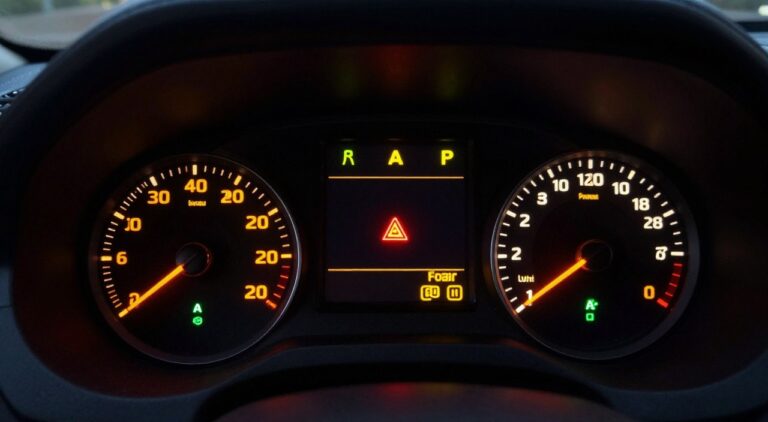
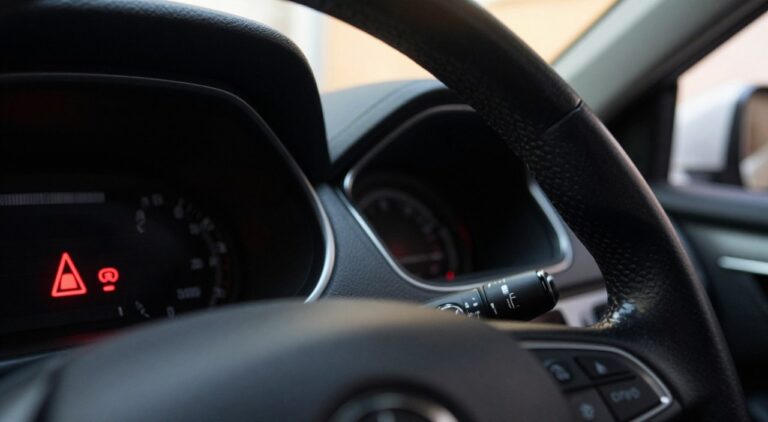
Drivers often ignore the tech under their feet until they see an abs light on car dashboard. This system is key for safety. It helps keep control when you brake hard.
It stops wheels from locking up. This lets you steer around things even when braking hard.

How the ABS prevents wheel lockup
The system watches each wheel’s speed with special sensors. If a wheel is about to stop while moving, it acts fast. It changes brake pressure quickly.
This stops tires from sliding. It keeps tires gripping the road. This essential interaction keeps your car stable on slippery roads.
| Feature | Standard Braking | ABS Braking |
|---|---|---|
| Wheel Rotation | Can lock up | Maintains rotation |
| Steering Control | Lost during skid | Retained during stop |
| Stopping Distance | Variable on slick roads | Optimized for safety |
The role of the dashboard warning light
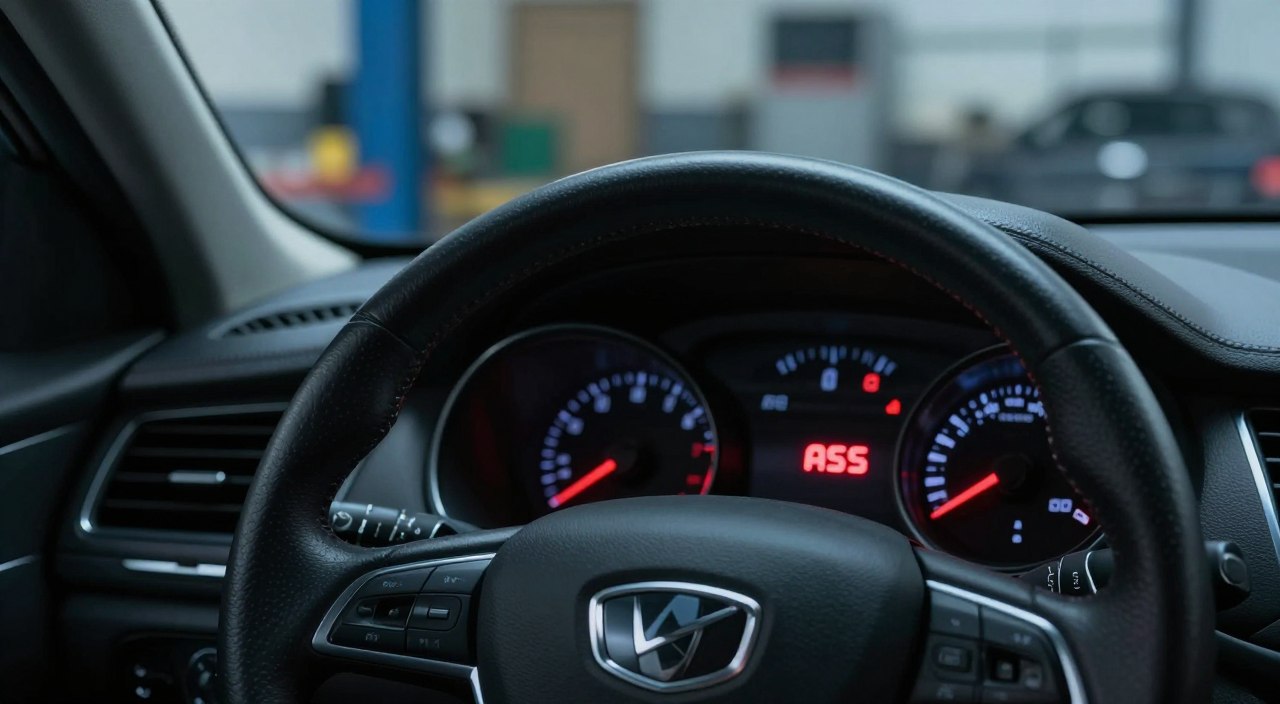
Your car’s dashboard warns you of problems. Seeing the abs light on car dashboard means there’s a fault. This light is a warning that the anti-lock feature might not work.
Even if your brakes work, you won’t have anti-lock help. Fixing this issue is important. It keeps your car safe for emergency stops. Ignoring this warning could be dangerous.
Common ABS light stays on causes
Drivers often feel scared when a warning light shows up on their dashboard. But, most ABS light stays on causes are simple to fix. By knowing the main causes, you can find the problem easily.

Sensor-related failures
The most common problem is a bad wheel speed sensor. These sensors check how fast each tire spins. If they get dirty or break, the light turns on.
Electrical and wiring interruptions
Wires can also cause trouble. They can get old, frayed, or rusty from salt and water. These electrical interruptions stop the signal from getting to the computer.
Mechanical component wear
At times, the problem is not with the wires but with parts that move. The tone ring on the wheel hub can get damaged or dirty. If the sensor can’t read it right, the light will go on. Knowing these abs warning light reasons makes fixing your car easier.
Initial safety checks and visual inspections
Often, the reason your abs light won’t go off is something simple. You can fix it yourself. Before you see a mechanic, do some quick checks. These steps can save you time and money.

Checking for debris around wheel hubs
The wheel speed sensors are near the hubs. They can get dirty from road grime and mud. This dirt can mess up the sensor’s reading of the wheel’s rotation.
Identifying visible damage to sensor cables
Look at the wiring harness for the sensors. Check for frays, cuts, or exposed wires. A small damage can cause a warning light to stay on.
Verifying battery voltage levels
Modern car electronics need steady power. A weak battery or failing alternator can cause problems. This can make the system think there’s a big issue.
| Inspection Area | Common Issue | Action Required |
|---|---|---|
| Wheel Hubs | Road Debris | Clean with compressed air |
| Sensor Cables | Frayed Wiring | Repair or replace harness |
| Battery Terminals | Corrosion | Clean and tighten connections |
| Voltage Output | Low Charge | Test with a multimeter |
Using an OBD-II scanner for diagnosis
I find that the quickest path to accurate abs light diagnosis involves plugging in a specialized diagnostic tool. Basic scanners only read engine codes. But a more advanced device lets me talk directly to the vehicle’s computer.
This connection is key for finding out which part is causing the warning.

Selecting the right diagnostic tool
Not every scanner can read brake system data. When I do abs system troubleshooting, I make sure the tool supports ABS and SRS modules. Standard code readers often miss these important protocols.
I suggest getting a mid-range scanner that streams live data. This lets me watch wheel speed sensors as the car moves. The right tool can save a lot of time and effort.
Interpreting ABS-specific trouble codes
After connecting the scanner, I look for codes starting with «C.» These are chassis codes, different from «P» codes for powertrain issues. Each code gives a clue, like a faulty sensor or a module communication error.
I always write down the exact code and its description before fixing anything. Sometimes, one fault can cause many secondary codes. Focusing on the main error helps avoid unnecessary part replacements.
Clearing codes to test for recurrence
After fixing a problem, I clear the codes to see if they come back. If the light stays off after a test drive, it might have been a temporary glitch. But if the code comes back right away, it’s a sign of a serious issue.
| Scanner Type | Capability | Best For |
|---|---|---|
| Basic OBD-II | Engine Codes Only | Quick Check Engine Light |
| Mid-Range Scanner | ABS, SRS, and Engine | Comprehensive DIY Repair |
| Professional Tool | Full System Diagnostics | Advanced Shop Mechanics |
Troubleshooting faulty wheel speed sensors
If you think there’s a abs sensor malfunction, it’s time to test it. These sensors keep an eye on wheel rotation. They stop the car from locking up when you brake hard. If they break, the car might stop working to keep you safe.
Testing sensor resistance with a multimeter
Use a digital multimeter to see if the sensor is working. First, find the sensor near the wheel hub and take it off carefully. Set your multimeter to ohms (Ω) to check resistance.
Put the probes on the sensor terminals. Look at the reading against your car’s manual. If it shows an open circuit or infinite resistance, the sensor is broken. A good sensor should have a specific resistance, showing it’s ready to talk to the control module.
Cleaning magnetic sensor tips
At times, an abs sensor malfunction is due to dirt or metal bits. These sensors use magnetic fields to track speed. Dirt can mess with the signal. Take off the sensor bolt and gently pull it out of the hub.
Use a soft cloth and mild electrical cleaner to clean the tip. Don’t use harsh brushes that could damage the sensor. After cleaning, put it back and test drive to see if the light goes away.
Replacing a damaged wheel speed sensor
If cleaning doesn’t fix it, you might need a new sensor. Start by disconnecting the electrical harness and removing the bolt. You might need penetrating oil if the bolt is stuck.
Take out the old sensor and put in the new one. Make sure it’s flush and tighten the bolt right. Then, reconnect the wiring and clear any error codes with your tool.
| Condition | Resistance Reading | Recommended Action |
|---|---|---|
| Healthy Sensor | Within Factory Specs | Clean and Reinstall |
| Short Circuit | Near Zero Ohms | Replace Sensor |
| Open Circuit | Infinite Resistance | Replace Sensor |
| Dirty Tip | Erratic Signal | Clean with Solvent |
Inspecting the ABS control module and wiring
Intermittent warning lights often hide in the control module area. When sensors seem fine, the problem is usually deeper. Careful inspection is key to find these hidden issues before they cause big problems.
Locating the electronic control unit
The ECU is the brain of your brakes. It’s near the hydraulic pump in the engine bay. Look for a rectangular metal box with many pins.
Make sure the car is off before you start. You might need to remove parts to see the unit. Always check your car’s manual for the exact spot.
Checking for corroded connector pins
Find the module and disconnect the wiring. Look for green or white powdery residue on the pins. This means moisture is getting in.
If you see corrosion, clean it with electrical contact cleaner. Don’t use metal picks. Then, put a little dielectric grease on the pins to keep them dry.
Testing for ground faults in the harness
Intermittent lights can be from bad grounding. Use a multimeter to check. Set it to resistance or continuity, then test the ground pin.
A high reading means a wire is broken or loose. Wiggling the harness can show you where. If it’s good, the meter will show almost zero.
| Symptom | Potential Cause | Recommended Action |
|---|---|---|
| Intermittent Light | Loose Ground Wire | Inspect and tighten harness |
| Green Pin Residue | Moisture Intrusion | Clean with contact spray |
| No Communication | Broken ECU Pin | Professional repair or replacement |
| System Shutdown | Blown Internal Fuse | Check module power supply |
Checking the hydraulic control unit and pump
The hydraulic control unit is key to your car’s brakes. It works with the electronic control module to control fluid flow. If it fails, your car might not stop well in emergencies.
Identifying symptoms of pump failure
When I check for a failing pump, I look for certain signs. A grinding or whining noise from the engine bay is a big clue. You might also feel no pedal vibration when you brake hard.
If the pump doesn’t work, the brakes can’t build enough pressure. This makes the brake pedal feel hard all the time. Finding these signs fast is key to avoiding bigger problems.
Testing the pump motor relay
Before thinking the pump is broken, I check if it gets power. The pump motor relay controls the power to the pump. If it’s stuck or damaged, the pump won’t work.
You can try swapping the relay with one from your fuse box. Or, use a multimeter to check for voltage at the relay terminals when the ignition is on. No power there usually means a blown fuse or a bad relay, not a broken pump.
Recognizing internal valve block issues
The valve block has solenoid valves that control brake fluid pressure. Over time, old brake fluid can clog these valves. A stuck valve can stop fluid from reaching a wheel or trap pressure.
If one wheel drags or won’t release, the valve block might be the problem. Internal leaks can also make the pedal feel spongy. Fixing these issues often needs special tools or replacing the whole unit.
| Component | Common Symptom | Diagnostic Action |
|---|---|---|
| Pump Motor | Whining noise or no activation | Check power supply and ground |
| Pump Relay | No power to the motor | Swap with known good relay |
| Valve Block | Stuck brake or spongy pedal | Inspect for fluid contamination |
Evaluating fuse and relay issues
Many dashboard warnings come from blown fuses or stuck relays. These parts protect your car’s electronics. Always check them before buying expensive parts.
Locating the ABS fuse box
Fuses are in two main spots in your car. One is under the hood, and the other is inside, near the driver’s side.
To find the ABS fuse, look in your owner’s manual. It will show you where it is. Look for «ABS» or similar labels on the fuse box.
Testing for continuity in fuses
Check if a fuse is working by using a multimeter. A visual check is not enough. A fuse can look good but not work.
Here’s how to test a fuse with a multimeter:
- Take out the fuse carefully.
- Put the multimeter probes on the fuse’s metal tabs.
- Listen for a continuous beep or a low reading.
- If it shows «OL» or no signal, replace the fuse.
Swapping relays to isolate the problem
Relays control high-current circuits. If one fails, your dashboard light may turn on.
To test a relay, swap it with one from a different system. If the light goes off, you found the problem.
«Always ensure the ignition is turned off before removing or installing any electrical components to prevent short circuits.»
If the problem stays after testing, the issue is deeper. This method saves time and avoids wrong part replacements.
Addressing low brake fluid levels
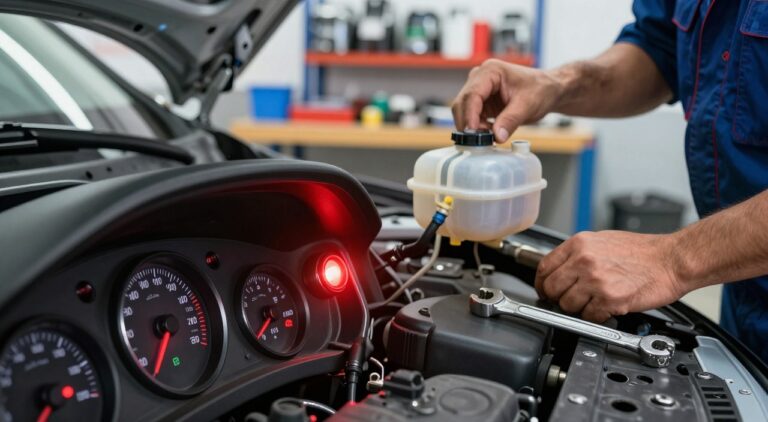
Checking the master cylinder can save a lot of time. The hydraulic system needs fluid pressure to work right. If the fluid level is too low, a warning light might turn on.
Checking the master cylinder reservoir
The master cylinder is easy to find. It’s on the driver’s side of the engine bay. Look for a clear plastic reservoir with «Min» and «Max» marks. Make sure the car is parked on level ground before checking the fluid.
If the fluid is low, don’t just add more without checking why. A big drop in fluid can mean worn-out brake pads. It could also mean a leak that needs fixing right away.
Checking your brake fluid color and level often can stop big problems. It helps your car stop well when you need it to.
Identifying leaks in the brake lines
If the fluid level keeps dropping, check the brake lines for leaks. Use a bright flashlight to look at the metal lines. Watch for these signs:
- Damp or wet spots around the fittings.
- Fluid drops from the brake calipers or wheel cylinders.
- Fluid puddles on the floor after parking.
- A soft feeling when pressing the brake pedal.
If you find a leak, replace the line or hose right away. Driving with a leaky brake line is very dangerous. It can make your brakes not work at all.
Bleeding the brake system after repairs
After fixing a leak or a faulty part, you need to get rid of air in the system. Air makes the brakes not work well. This process, called bleeding, makes the pedal feel firm again.
You can use a manual vacuum pump or get help from someone to pump the pedal. Always follow the maker’s steps for bleeding. This keeps your brakes working right and safe.
When to seek professional mechanical assistance
Knowing when to stop is as important as knowing how to start. Some small problems can be fixed at home. But, finding a good abs light stays on fix might need a pro.
Recognizing complex electronic faults
Today’s cars have many sensors and modules that talk to each other all the time. If you see errors between these parts, it might be a complex electronic fault. Simple tools can’t fix this.
These problems often have to do with software or circuit board issues. Trying to fix them without the right tools can hurt your car’s electrical system.
Safety risks of driving without ABS
Driving without a good braking system is very risky, more so in wet or snowy weather. Without ABS, your wheels can lock up during stops. This means you lose control of your car.
Don’t ignore a warning light that won’t go away. Using normal brakes when ABS is needed can cause your car to skid and stop farther than usual.
Knowing when a specialized shop is required
If you’ve tried everything and still can’t fix the abs light stays on fix, it’s time to see a pro. Specialized shops have tools that can get data from the car’s maker. This info is not available to everyone.
Experts also give a warranty on their work. This means the repair is done right and safe. Going to a certified shop helps avoid bad brake fixes.
| Repair Scenario | DIY Approach | Professional Shop |
|---|---|---|
| Simple Sensor Replacement | Feasible | Recommended |
| Wiring Harness Repair | Difficult | Highly Recommended |
| Control Module Programming | Not Possible | Required |
| Hydraulic Pump Failure | High Risk | Essential |
Conclusion
A good braking system is key for your safety on the road. If a light comes on, stay calm and check your car parts carefully.
Start with simple checks before using tools like an OBD-II scanner. Often, small problems like dirt on sensors or loose wires can be fixed at home.
For big problems, get help from a pro. Shops like Firestone or Midas have certified techs who follow strict safety rules.
Keeping your car in good shape stops big problems later. Regular checks make your car reliable and save you money. Always take care of your car to drive safely and smoothly.
FAQ
Why is my abs light on car dashboard staying lit after I start the engine?
The abs light stays on causes can be simple or complex. It might be a abs sensor malfunction or a problem with the ABS control module. The system checks itself every time you start the car. If it finds a problem, like a bad signal from a Bosch sensor, the light stays on.
Is it safe for me to continue driving if the abs light won’t go off?
It’s not safe to drive if the abs light won’t go off. Your car’s brakes might still work, but you’re missing a key safety feature. This feature helps you stop safely on slippery roads. I advise you to check the abs system right away to avoid losing control during a stop.
What are the most common abs warning light reasons that I should check first?
The most common reasons for the abs warning light are road debris and damaged wiring. Before spending a lot on repairs, check for corroded connector pins or low battery voltage. These are common issues that can affect the Ford or Chevrolet braking systems.
How do I begin an abs light diagnosis using a scanner?
To diagnose the abs light, use an OBD-II scanner like an Innova 5610 or a BlueDriver. Plug it into the port under the dash. It will show you specific codes that tell you which part is failing. This way, you won’t replace parts that are still working.
Can I perform an abs light stays on fix myself if a sensor is dirty?
Yes, cleaning the wheel speed sensors can fix the abs light stays on issue. Remove the sensor and clean it with a soft cloth. If the light still doesn’t go off, use a Fluke multimeter to check the sensor. If it’s not working right, you’ll need to replace it.
What should I do if the issue is in the ABS hydraulic control unit?
If the hydraulic control unit or pump might be failing, start by checking the pump motor relay and the ABS fuse. If everything looks good, listen for the pump or check for valve problems. For tough issues, a Snap-on diagnostic workstation can help.
Does low brake fluid trigger the ABS warning light?
Always check the brake fluid first. Low fluid can be caused by worn brake pads or leaks. If the fluid is low, add Prestone DOT 3 or Castrol SRF and look for leaks. This ensures the abs light stays on causes are fixed.